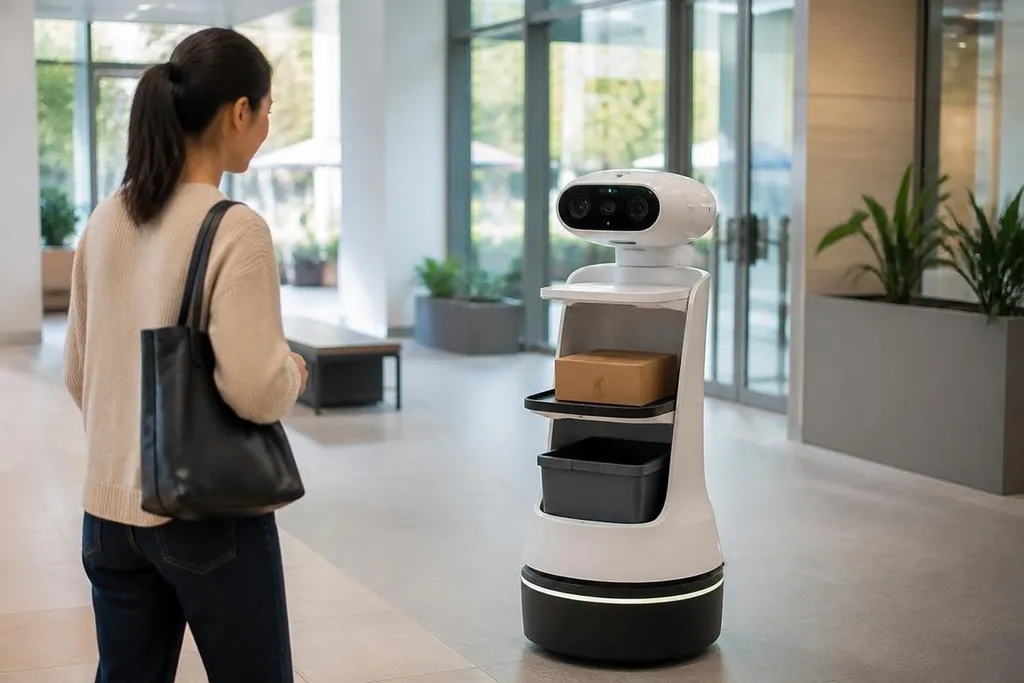
A customer service robot has to do more than answer a spoken question. It must hear a person, understand the request, find the right information, and act safely in a physical space.
Quick read
- AI can help a robot handle open-ended questions instead of fixed button menus.
- Cameras and sensors give the robot context, but they don’t remove the need for clear limits.
- A human handoff remains part of the design, especially for unusual or sensitive requests.
What AI changes
Older service robots tend to follow set scripts. A person chooses an option, the robot reads a reply, and the task ends there. AI lets the system work with ordinary speech, so a person can describe a need in their own words.
That change matters when the request does not match one stored phrase. Someone might ask where a room is, then add a question about opening hours. The robot has to split the request into parts, answer the first one, and decide if it has enough information for the second.
Language models help with that exchange. They predict a useful reply from the words they receive, but they don’t know by themselves which facts are current or permitted. A service robot needs a connection to approved information, such as a site map, product record, booking system, or staff directory.
Rules around that connection matter. It may read a public location from a database, but it should not expose a customer’s private booking details to anyone nearby.
Good service depends on the boundary between what the AI can say and what the robot is allowed to do.
From speech to movement
A spoken answer is only one part of the job. The robot may also need to turn toward a person, point to a location, guide them across a building, or pass an item to them.
Cameras help it detect people and objects. Other sensors measure distance and movement. Those inputs form a working view of the surroundings, then the robot plans a route that avoids walls, furniture, and people.
That process can fail in ordinary ways. Noise may affect speech recognition. A crowd can block the camera view. A person may move while the robot is turning. Customer service robots need a safe stop, a clear way to call staff, and a route that can be changed when the space changes.
AI can also help the robot decide when a task has gone beyond its limits. If the request is unclear after several attempts, the system can ask for a staff member. That handoff should keep the conversation and relevant details, so the person doesn’t need to repeat the whole problem.
Customer service robots sit inside a larger system. Robot24.com robotics coverage can connect their replies to the hardware, software, and business choices behind each deployment, giving a buyer context for the limits ahead.
Where the limits remain
AI does not give a robot common sense in the human sense. It can produce a fluent answer that sounds right while using an old record or misunderstanding the request. A manager still needs to check its data sources, set response rules, and review failed interactions.
Privacy also needs a physical plan. Microphones and cameras may collect information from people who never agreed to use the robot. The system should limit what it stores, control who can see it, and make recording notices easy to find.
The body creates another limit. A robot that answers questions at a counter has a smaller task than one that moves through a busy building. Wheels, batteries, doors, lifts, floor surfaces, and charging time all affect the service people receive.
The strongest opposing view is that a screen or phone may handle many requests at lower cost. That is true for text-only work. A physical robot earns its place when being present, moving through a site, or giving directions solves a problem that a screen cannot.
A practical buying checklist
Use these checks before you treat an AI service robot as ready for daily work:
- Set the task boundary: write down the questions and physical actions the robot must handle.
- Check the data path: list every system the AI can read and the records it may change.
- Test the handoff: confirm that staff can take over without asking the person to start again.
- Measure failure cases: test noise, crowds, blocked routes, unclear speech, and missing data.
- Plan for care: price charging, cleaning, software updates, repairs, and staff training.
- Review privacy: decide what the cameras and microphones store, for how long, and who can access it.
I'd judge a customer service robot by its failed conversations and handoffs, not by its smoothest demo. The useful next step is a small trial with fixed tasks, recorded failure points, and a clear rule for when a person takes over.